Pipeline Intelligence Beyond SCADA: Why the Next Decade of Oil and Gas Belongs to Operational Intelligence
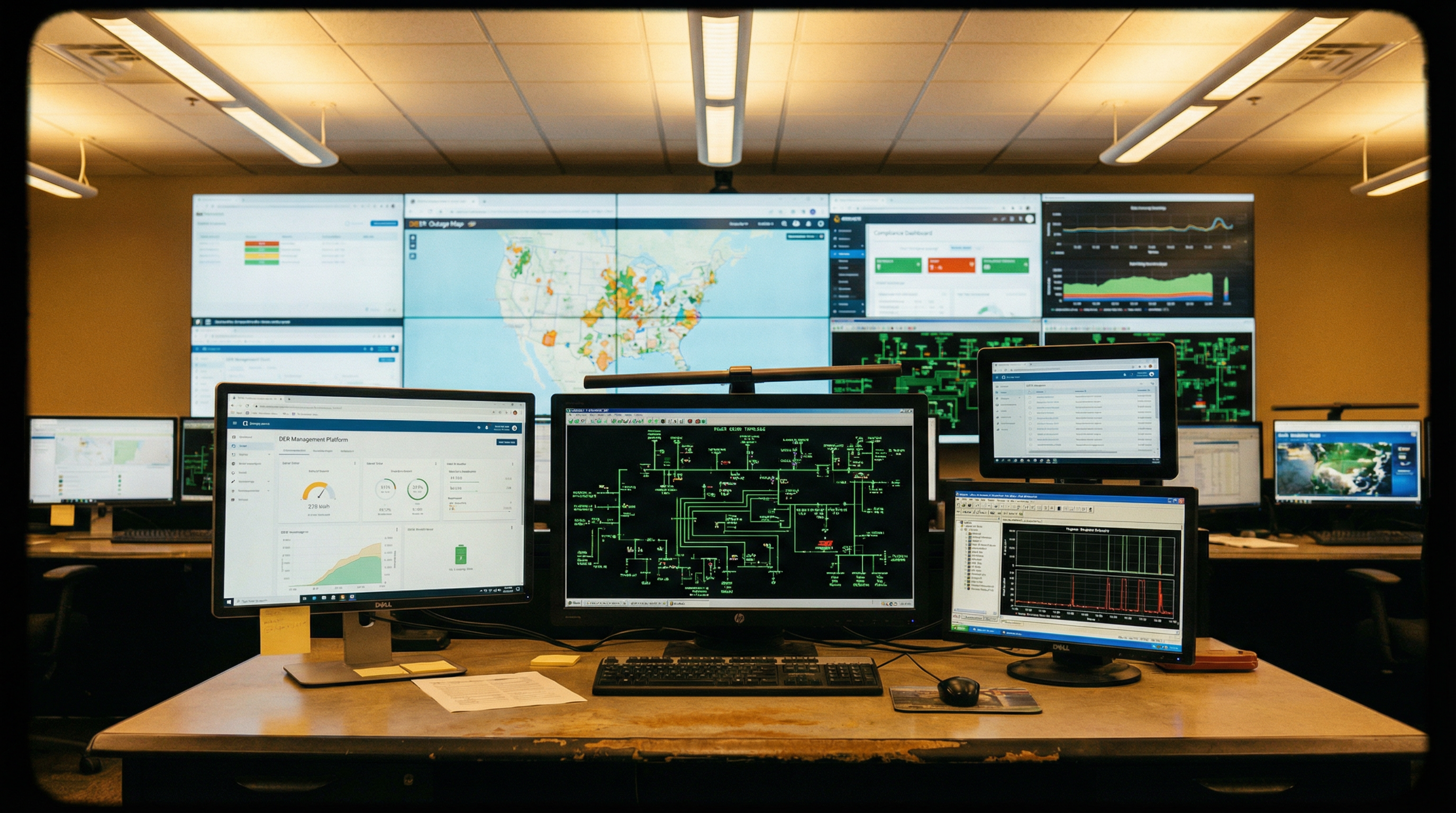
SCADA systems monitor. They don't correlate. The future of pipeline operations belongs to the companies that treat their data (pressure, integrity, emissions, field operations) as one interconnected intelligence system, not separate reporting silos.
The Structural Condition: Supervision Without Intelligence
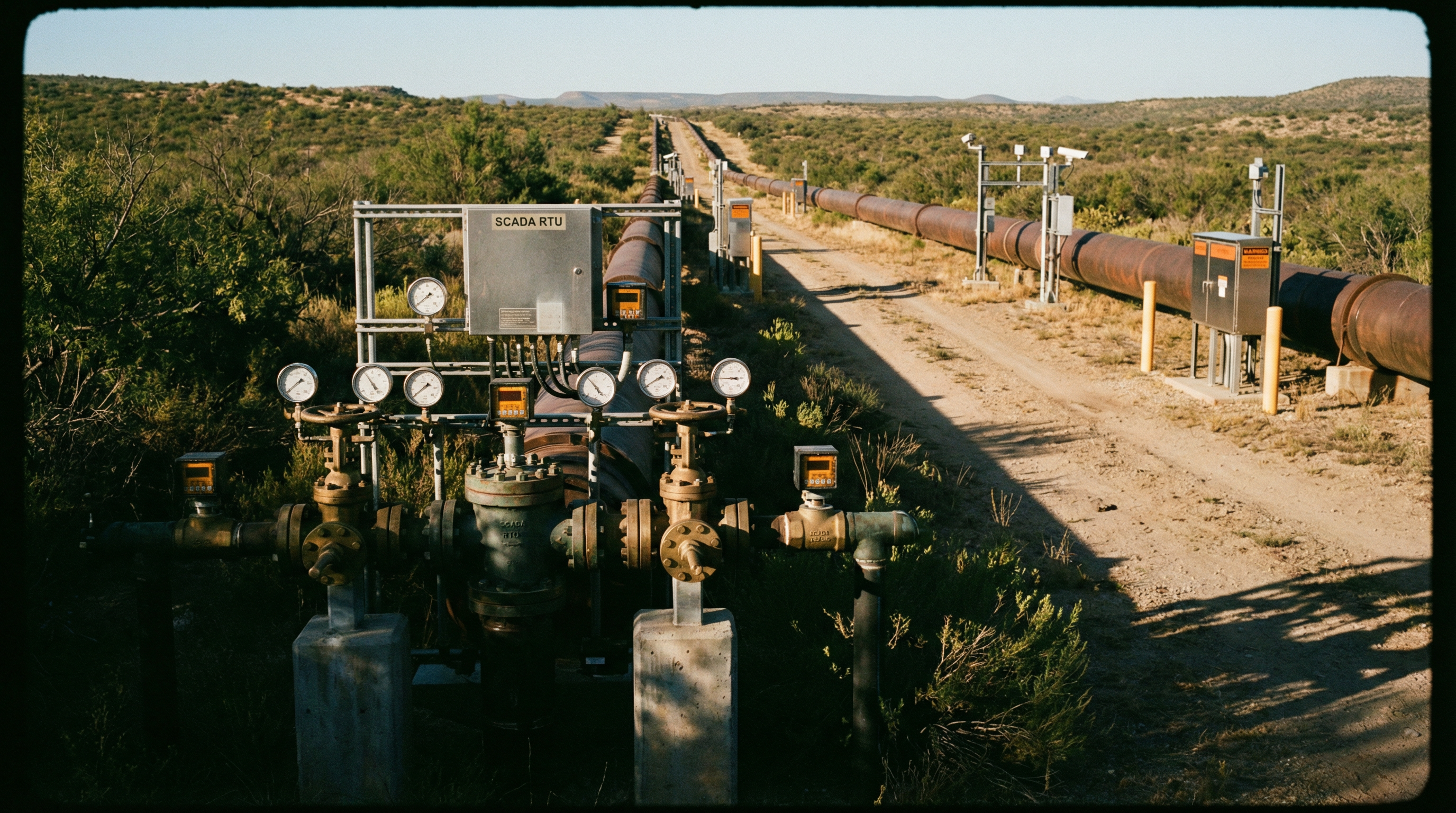
Most pipeline operations run on a technology stack born in the 1970s: SCADA systems designed to do one thing exceptionally well, tell you what’s happening right now. Pressure in segment A. Flow in segment B. Temperature in the compressor station. Real-time data streams that have kept millions of miles of pipe safe for decades.
But SCADA was built for supervision, not intelligence. It monitors. It alerts on thresholds. It doesn’t correlate. It doesn’t reason across domains. When pressure in one segment trends upward, and vibration in another segment shows an unusual harmonic signature, and a third segment’s temperature begins a slow climb, SCADA sees three independent events. The operator sees the same thing: three unrelated alarms.
The correlation (the story that connects these signals) lives nowhere in the system. It lives in the engineer’s experience, in conference calls between teams, in spreadsheets that never quite sync. That cognitive work, that pattern recognition, that diagnosis happens outside the operational model. In the modern pipeline, that’s a structural liability.
6–8
Average number of disconnected integrity systems in a midstream pipeline operation, each with its own data model, reporting cadence, and audit trail.
The Fragmentation Problem: Many Systems, No Common Language
Pipeline integrity management didn’t break into silos by accident. It evolved into them by necessity. Each function grew independently, optimized for its specific mission.
SCADA monitors real-time operations. Pressure, flow, temperature. Hundreds of data points per second streaming into the control room.
ILI programs generate structural insight. Inline inspection tools move through the pipe every five to seven years, measuring wall thickness, mapping corrosion, identifying dents and anomalies. Terabytes of detailed geometric data, but it arrives quarterly, not continuously.
Cathodic protection systems prevent external corrosion. CP readings track the electrochemical environment of the pipe, providing early warning of protection failures. Independently monitored. Independently reported.
Leak detection systems listen for acoustic signatures. They catch ruptures and large holes but operate on a completely separate sensor network and data model than everything else.
Emissions monitoring tracks methane releases. EPA rules demand real-time data and monthly reporting. Another system. Another database. Another audit trail.
Field operations generate tactical intelligence. Aerial patrols, ground surveillance, manual gauges, maintenance logs. Local knowledge that often contradicts what the central system is saying.
Each program is essential. Each has its own regulatory requirement, its own engineering standard, its own reporting cadence. But they’re designed to be independent. They share no common operational model. A corrosion trend visible in CP data doesn’t automatically trigger a reassessment in the integrity management system. A pressure anomaly doesn’t auto-correlate with recent ILI findings or current field conditions. The connections are made by people, not by the system.
This fragmentation is not a technical failure. It’s a structural condition of how the industry grew. But it comes with a cost.
The Cost of Disconnection: Reactive by Design
When you operate a pipeline through separate integrity programs, you’re architecting reactivity into your operational model.
A compressor bearing shows unusual vibration. Is it concerning? That depends on whether there’s a partial blockage two stations upstream, but that data lives in ILI reports from last year, not in the control room. The operator doesn’t have the context. The decision waits.
Cathodic protection readings shift on a segment. Early sign of coating degradation. But correlating this with pressure cycling history, soil corrosion models, and recent ILI results requires moving data between systems and analysts. The pattern may not be obvious for weeks.
A leak is detected. The integrity team is mobilized. But the root cause (a combination of wall loss from earlier ILI, a pressure transient from a valve closure three weeks ago, and seasonal corrosion acceleration) isn’t reconstructed by any intelligence system. It’s reconstructed in a post-incident report, months later.
None of these decisions are made poorly because engineers aren’t competent. They’re constrained because the operational model doesn’t give intelligent actors the integrated information they need in real time. The system is not designed to predict. It’s designed to respond.
The Regulatory Pressure: Compliance Complexity Increases
The structural fragmentation gets worse as compliance requirements multiply.
PHMSA pipeline integrity management rules require proof that you’re systematically assessing risk and preventing failures. But risk assessment across a midstream system requires correlating decades of inspection history, operational stress, environmental factors, and maintenance actions. Building that correlation manually (outside any operational system) is expensive and slow.
EPA methane rules require continuous emissions monitoring at compressor stations and quantification of loss rates. These data need to flow to regulatory databases on schedule. But correlating emissions with operational conditions (compressor load, ambient temperature, product composition) requires bridging yet another data silo.
Scope 3 emissions reporting for public companies now requires pipeline operators to quantify the carbon intensity of transported product. That calculation flows backward from distribution, through product tracing, to operational profiles at delivery points. Another data requirement. Another connection point.
Each rule is reasonable. Each requirement is necessary. But each one adds pressure to solve an integration problem that the current architecture isn’t equipped to solve. Compliance becomes a data engineering problem more than an operations problem.
The Shift: From Monitor-and-Respond to Predict-and-Prevent
Something is changing. Operators are beginning to ask a different question: Can we connect these systems?
Not by replacing SCADA or ILI programs or emissions monitoring. By building a new layer that treats all of this data (real-time operational data, historical inspection data, maintenance records, field observations, environmental factors, regulatory compliance metrics) as one coherent information model.
When you can correlate:
- Real-time pressure trends with pipe segment geometry from ILI
- Cathodic protection readings with soil conditions and coating integrity
- Vibration signatures with compressor maintenance history and seasonal stress patterns
- Leak detection events with recent inspection findings and historical anomalies
- Emissions rates with operational load profiles and equipment-level data
…then prediction becomes possible. A pressure trend doesn’t just trigger an alarm. It triggers a diagnostic: which segments are at risk based on known geometry and current conditions. CP shifts don’t wait for manual interpretation. They correlate with environmental conditions to identify the coated segments most likely to fail next. A vibration anomaly doesn’t need an engineer to manually check five databases. The system shows the maintenance history, the recent load profile, the seasonal factors, and the likely failure mode.
This is operational intelligence: the ability to see the pipeline not as isolated data streams and periodic reports, but as one interconnected system where pressure, integrity, emissions, and field conditions all inform a single operational picture.
The Compound Insight: Optimization Across Three Dimensions
Here’s what becomes possible when integrity, emissions compliance, and operational efficiency share a common intelligence model:
Historically, these were competing priorities. Push harder on the pipeline for throughput, and you increase corrosion risk and emissions. Optimize for integrity safety, and you might leave throughput on the table. Tighten emissions controls, and you add operational cost or reduce capacity.
But these constraints are only real if you’re optimizing within silos.
When you can see the complete picture (where a pressure increase not only improves throughput but also shows manageable integrity impact based on known wall thickness, coating condition, and current corrosion trends; where emissions reductions achieved through operational adjustments correlate with reduced stress on high-risk segments; where maintenance windows align with both integrity needs and emissions compliance events), then optimization becomes possible across all three simultaneously.
The pipeline that integrates its intelligence doesn’t choose between safety and efficiency. It finds the operating envelope where both are optimized together.
What’s Changing in the Market
The regulatory environment is moving toward continuous, granular data. PHMSA is pushing for real-time integrity risk assessment. EPA methane rules now include equipment-level emissions data. Scope 3 carbon reporting requires product-level tracing. Public companies need proof of operational resilience to climate and geopolitical risk.
All of this data is being generated today. It just isn’t connected.
The operators who move first to connect this data (to build operational intelligence on top of their existing SCADA, ILI, and compliance systems) will own a competitive advantage that’s hard to replicate. They’ll move from quarterly integrity reviews to continuous risk visibility. From compliance-driven data collection to compliance that emerges from operational intelligence. From reactive maintenance to predictive action.
This isn’t about replacing proven technology. It’s about building a reasoning layer that lets existing systems communicate and amplify each other’s value.
The operators who connect their data first don't just gain visibility, they gain compounding advantage. Each new data stream makes every existing stream more valuable. The cost of waiting isn't static; it grows as competitors build intelligence density you can't replicate quickly.
The Next Decade
The pipeline networks that thrive over the next decade won’t be distinguished by their sensors or their compliance programs. Every operator has those. They’ll be distinguished by the operators who treat their pipeline data (the pressure streams, the inspection databases, the emissions records, the field reports, the integrity histories) not as separate monitoring programs reporting to separate departments, but as one interconnected intelligence system.
The question isn’t whether this shift will happen. Competitive pressure and regulatory complexity are pushing it forward. The question is which operators will lead it.
If you’re managing pipeline operations and starting to see the pressure to connect these silos, you’re not alone. This is a structural challenge facing the entire industry. And it’s solvable. Organizations like Quatro are building the intelligence infrastructure that lets operators correlate their complete operational picture, and turn that picture into governed autonomous action. The path forward isn’t building new systems. It’s connecting the ones you have into one reasoning model.
That’s where pipeline operations go next.