From Reactive Intervention to Early Warning: The Case for Predictive Community Intelligence
The data that predicts crises exists in separate systems across education, health, and social services. When connected, it reveals vulnerability before crisis, without surveillance.

The Reactive Threshold
Social programs operate at a threshold. They respond when the condition crosses it.
A child becomes malnourished before the health system names it as malnutrition. A teenager joins a gang before the community program reaches them. A family loses housing before social services finds them. The intervention arrives after the need has become a crisis.
This is not a failure of individual agencies. It’s a structural condition. Each system (education, health, social services, juvenile justice, housing) collects signals about the same communities. But each system operates those signals in isolation.
The school district observes attendance. The health clinic observes nutrition and vaccination. The social services agency observes housing stability and family structure. The juvenile justice system observes arrests and court involvement. The municipal services department observes 311 calls and neighborhood conditions.
None of them sees what the others see.
A child’s declining school attendance shows weeks before dropout. A household’s nutritional stress appears in clinic visit patterns months before hospitalization. A neighborhood’s economic displacement emerges in housing services calls and eviction records before displacement becomes visible in census data.
The signals exist. They are already being collected. They live in systems already built and already staffed. But they remain isolated.
What Connected Visibility Reveals
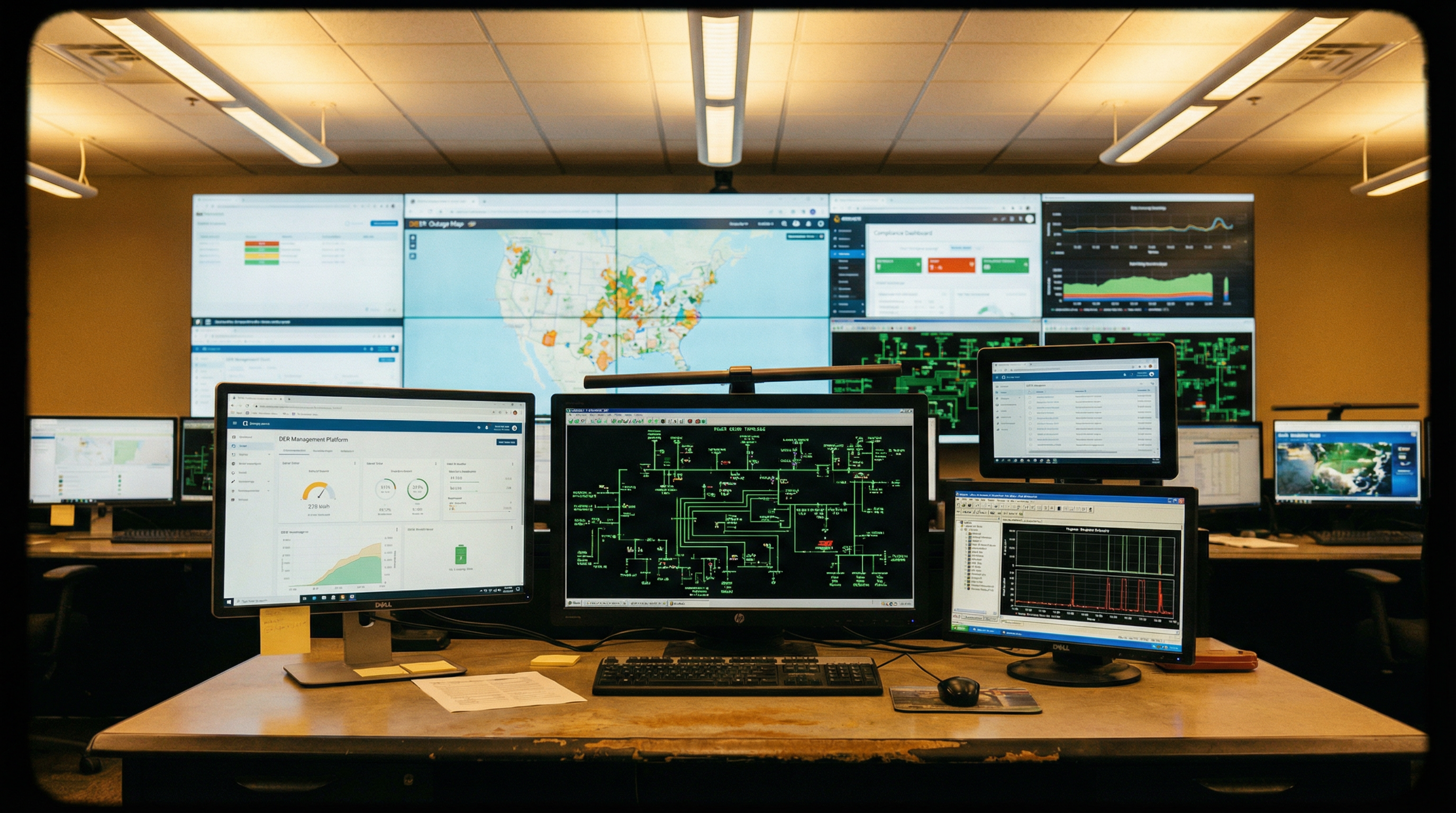
When these signals are brought into a single operational view (governed carefully, with explicit privacy protections, aggregated at the community level), patterns become visible that no single system could see alone.
A youth vulnerability index emerges. It combines school attendance, health clinic utilization, family economic indicators, and neighborhood risk factors into a composite risk score. The index is calculated at the parish or ward level, not the individual level. It shows which neighborhoods are experiencing rising vulnerability, and which specific types of vulnerability dominate in which places.
When a malnutrition early warning system connects clinic data, school meal program participation, household economic indicators, and water quality reports, the pattern becomes visible three to six months before individual diagnoses spike. The signal is community-level: “This neighborhood is showing nutritional stress across multiple indicators.” The action is coordinated: school counselors, health workers, community health volunteers, and social workers all receive the same operational picture and can align their interventions.
When youth risk converges across school, health, and community data, the signal is clear. A teenager whose school attendance is declining, whose clinic visits show stress indicators, and whose neighborhood is experiencing rising gang activity is visible to every system that could help, before they appear in the juvenile justice system.
The visibility changes what is possible. It transforms intervention from reactive to predictive. It replaces the crisis response with the coordinated intervention.
Why This Differs from “Big Data for Social Good”
The difference is governance.
Governance means: every data point has an explicit purpose. Education data is used for education operations and community-level health prediction. It is not available for surveillance. Health data informs health operations and community-level social risk prediction. It is not available for police targeting.
Governance means: every action is auditable. When a community health worker is deployed to a neighborhood based on a nutritional risk score, that decision is traceable. Why that neighborhood? What data points led to that action? What outcome resulted?
Governance means: the community knows what data is being used and how. It is not hidden behind an algorithm or a dashboard only administrators see. The operational picture is transparent to the organizations and people operating within it.
Governance means: the data moves through a single intelligence system, not through multiple independent tools that never speak to each other. When education, health, and social services are operating from the same operational model (even if they use different operational systems) they can coordinate. When they operate from different models, they cannot.
The surveillance risk is real. Connected data about vulnerable populations can be weaponized. The protection against that is not to avoid connection. It is to govern the connection explicitly. To define what data moves where, why, and how it can be used. To make the system transparent and auditable. To ensure that the intelligence serves the community, not the state’s ability to monitor it.
The Shift from Counting Crises to Preventing Them
The structural shift is this: communities move from measuring how many crises they respond to toward measuring how many crises they prevent.
It is a shift from: “We served 1,200 malnourished children this year” to “We identified and intervened in nutritional stress in 8 neighborhoods before hospitalization rates rose.”
It is a shift from: “We prevented 47 dropouts through our after-school program” to “We identified 34 teenagers at risk of dropout and coordinated interventions across school, mentorship, and community programs. 31 stayed in school.”
It is a shift from: “We placed 156 families in housing” to “We identified neighborhoods experiencing rising displacement risk and deployed housing counselors before evictions. We stabilized 89% of at-risk families.”
The operational picture becomes predictive instead of reactive. The agencies that operate within it become coordinated instead of siloed.
Why This Requires Connecting Existing Systems, Not Building New Ones
The instinct in social infrastructure is often to build a new system. A new unified data warehouse. A new single platform for all agencies. A new integrated technology stack.
That takes years. It requires buy-in from every agency simultaneously. It requires reconciling different data standards, different governance models, different incentive structures.
The faster path is to connect the systems that already exist. The school district has its data systems. The health department has its systems. Social services has its systems. They don’t need to be replaced. They need to be connected through a single operational intelligence model.
One system becomes the source of truth for education operations and feeds school-level insights to community-level intelligence. Another becomes the source of truth for health operations and feeds health-level insights to community-level intelligence. The intelligence system connects them, not by replacing them, but by creating a governed interface between them.
The timeline becomes months instead of years. The resistance becomes smaller because no agency loses control of its data. The governance becomes clearer because it is defined explicitly between existing systems rather than embedded in a new one.
What Enables This Now
Three technical shifts make this possible today:
First: Operational intelligence systems that can connect data from multiple sources without moving the data itself. The source systems remain the source of truth. The intelligence system queries them through governed interfaces.
Second: Privacy-preserving aggregation that makes community-level patterns visible without revealing individual-level detail. The risk score for a parish is visible. The risk scores for individual households are not.
Third: Operational coordination frameworks that allow multiple agencies to act on the same intelligence picture without requiring them to use the same tools or data models. Each agency continues to use its own systems. They align their actions through the common operational picture.
These capabilities are no longer experimental. They exist today in communities across three continents.
The Outcome
The cities and development organizations that move first on predictive community intelligence don’t win because they have a better platform. They win because they have a clearer operational picture than their competitors, and that clarity allows them to act faster and more coordinated than anyone else.
They identify vulnerability before crisis. They coordinate intervention across agencies that previously operated in isolation. They measure prevention, not just response.
They shift from counting the crises they manage to preventing the crises from appearing at all.
Quatro’s intelligence stack helps cities and development organizations connect data across education, health, and social services, creating the operational picture that transforms intervention from reactive to predictive.