Decision Debt: When the Record Outlives the Judgment
Regulated operations keep meticulous records of what was decided. Far fewer keep the structure of why — the facts that were available, the options that were weighed, the reasoning that was applied. When a past decision gets reused without the judgment that justified it, the operation inherits a liability it cannot see. The record outlives the judgment, and the gap between them is where risk accumulates.
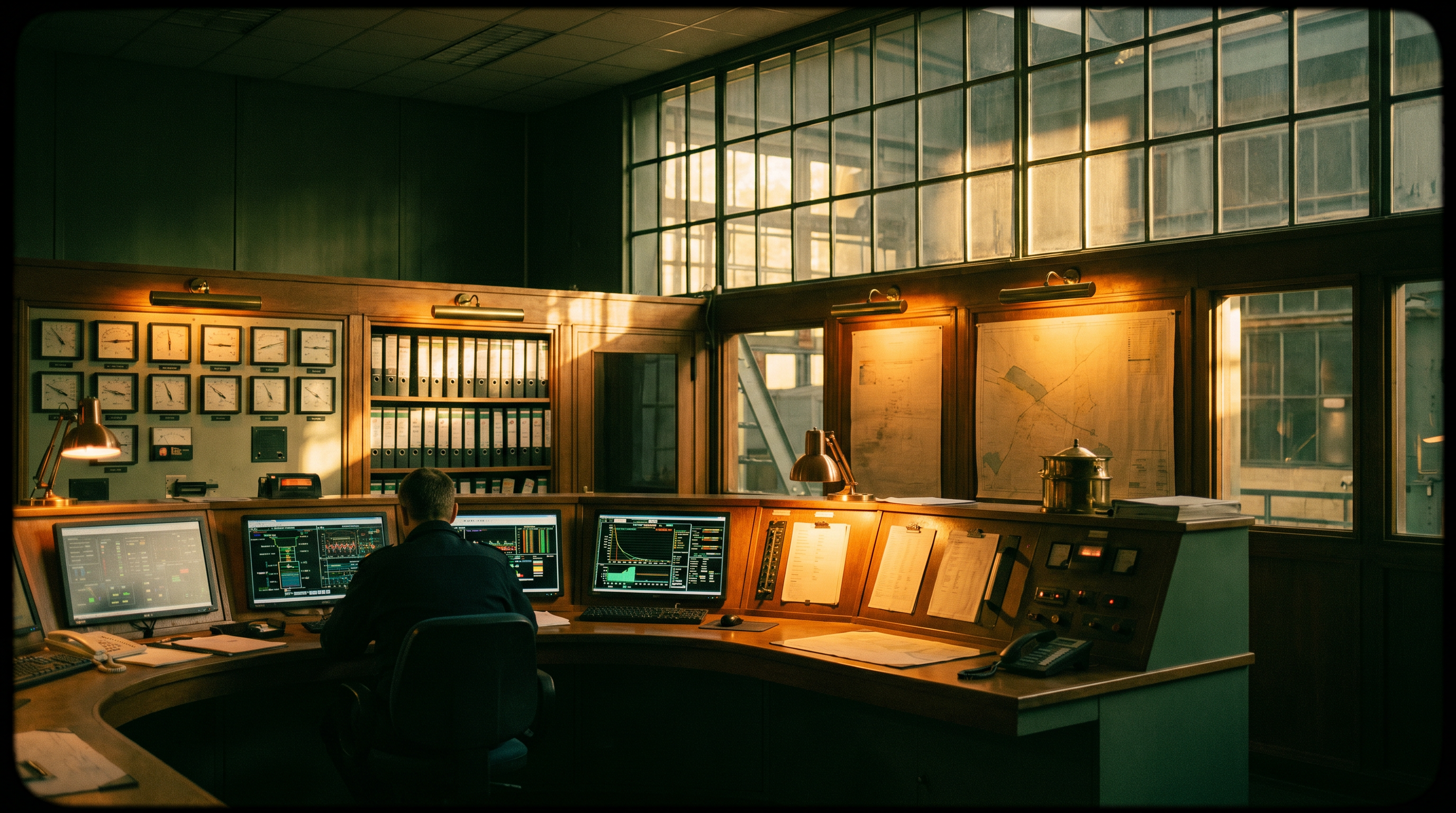
The decision you reused was never really yours
An inspection gets deferred because it was deferred last cycle and nothing went wrong. A worker is cleared for a task because a similar worker was cleared before. A maintenance interval holds because that is the interval the operation has always run. Each of these is a decision. Each one feels low-risk, because it follows a precedent. And in most regulated operations, the precedent is a row in a log: a date, an outcome, a name, a checkbox.
What the row almost never carries is the judgment behind it. Why was the inspection safe to defer that cycle? What conditions were true at the time? What did the person who made the call actually weigh, and what would have changed their mind? That reasoning lived in someone’s head, in a hallway conversation, in an email thread that has since scrolled out of reach. The decision was recorded. The judgment was not.
So the operation reuses the decision without the judgment that justified it. The record says “deferred, no incident.” The conditions that made deferral defensible have quietly changed, and no one notices, because the part of the decision that would have flagged the change was never captured in the first place.
This is decision debt. It is the gap between the decisions an operation keeps reusing and the judgment that originally made them sound. Like financial debt, it compounds silently and comes due at the worst possible moment — usually in front of an auditor, a regulator, or an incident investigator asking the one question the record cannot answer: why.
Recorded is not the same as defensible
Most operations have spent the last decade getting better at recording. Workflows are digitized. Approvals are timestamped. Logs are immutable. The volume of decision history available to any given team is larger than it has ever been.
The problem is that three things are quietly treated as if they were the same, and they are not.
Recorded is not valid. A decision being written down says nothing about whether it was correct, or whether the conditions that made it correct still hold.
Repeated is not wise. A decision that has been made the same way fifty times is not fifty times safer. It may simply be the same unexamined assumption, propagated fifty times, accumulating exposure each cycle.
Searchable is not defensible. Being able to retrieve what was decided is not the same as being able to explain why it was the right call. The first is a database query. The second requires the reasoning, the facts available at the time, and the rule that was applied — structured in a way that a person who was not in the room can reconstruct.
When an operation conflates these, it builds a comforting picture of control. The records are complete, the dashboards are green, the audit trail is intact. And underneath, decision debt is accumulating, because completeness of the record has been mistaken for soundness of the judgment.
Why the structure walks out the door
The reason judgment so rarely survives is structural, not a failure of diligence. Operators are doing exactly what they are supposed to do. They make a call, they log the outcome, they move to the next thing. The log was designed to record the conclusion, because that is what the next process step needs. It was never designed to preserve the reasoning, because preserving reasoning was assumed to be the operator’s job, in the operator’s head.
That assumption holds right up until the operator changes roles, retires, or is simply unavailable on the day the question gets asked. Then the institution discovers that its knowledge of why it operates the way it does was personal, not organizational. The most experienced people carry the most judgment and leave the largest holes when they go.
The result is an operation that can tell you everything about what it has done and very little about whether it should keep doing it. Reactive by default, because the only signal it can act on is the incident that finally exposes the debt. Defensible only by reconstruction, because the explanation has to be reassembled by hand, after the fact, under pressure, from fragments.
What changes when judgment becomes structural
The shift that closes decision debt is not more recording. It is capturing the right structure at the moment a decision is made, so that the judgment becomes part of the operation’s durable model rather than part of one person’s memory.
Four things, captured in the moment, change the economics entirely. The context that was available — the facts, the conditions, the policy in force, the relevant precedent. The reasoning that was applied — which rule or obligation drove the conclusion, and what alternatives were considered and set aside. The decision itself — what was concluded, by whom, and what residual uncertainty was acknowledged. And the outcome — what actually happened next, which is the only thing that can ever validate the decision after the fact.
None of this asks the operator to write an essay. The option slate, the rationale, and the acknowledged uncertainty are cheap to record at decision time and nearly impossible to reconstruct later. The goal is not to capture judgment itself, which is often irreducibly tacit. It is to preserve the structure that judgment leaves behind.
Two principles keep that structure honest. The first is that a decision becomes trusted precedent only once its outcome has validated it. A choice that has not yet been confirmed by what followed is a hypothesis, not a precedent, and reusing it as if it were settled is how decision debt accumulates. The second is that what the operation observes and what the operation authorizes are different things. The pattern in the decision log can suggest that a rule is missing or that an assumption has drifted. It cannot promote itself into policy. A human, with the reasoning in front of them, decides whether a repeated pattern has actually earned the status of a rule.
When this structure exists, the question an auditor asks stops being a fire drill. “Why did you defer that inspection?” has an answer attached to the decision itself: here were the conditions, here was the rule, here was the reasoning, here is what we expected and here is what happened. Operational intelligence, in the sense that matters, is not knowing what you did. It is being able to defend why, without a scramble.
The question worth asking before the next reuse
Every regulated operation is already sitting on a large stock of reused decisions. Most of them are sound. Some of them are decision debt, still compounding after the judgment that justified them has stopped forming. The operation usually cannot tell which is which, because the record was built to hold conclusions, not reasoning.
The useful move is not to audit the entire back catalogue. It is to change what gets captured going forward, so that each new decision carries its own justification and each reused decision can be checked against the conditions that originally made it sound. That is a modest change in what an operation records and a large change in what it can defend.
The procurement question that exposes the gap is simple. When a decision in your operation gets reused, can you see the judgment it was based on, or only the outcome it produced? If the honest answer is only the outcome, the debt is already there. It is just waiting for the question that brings it due.