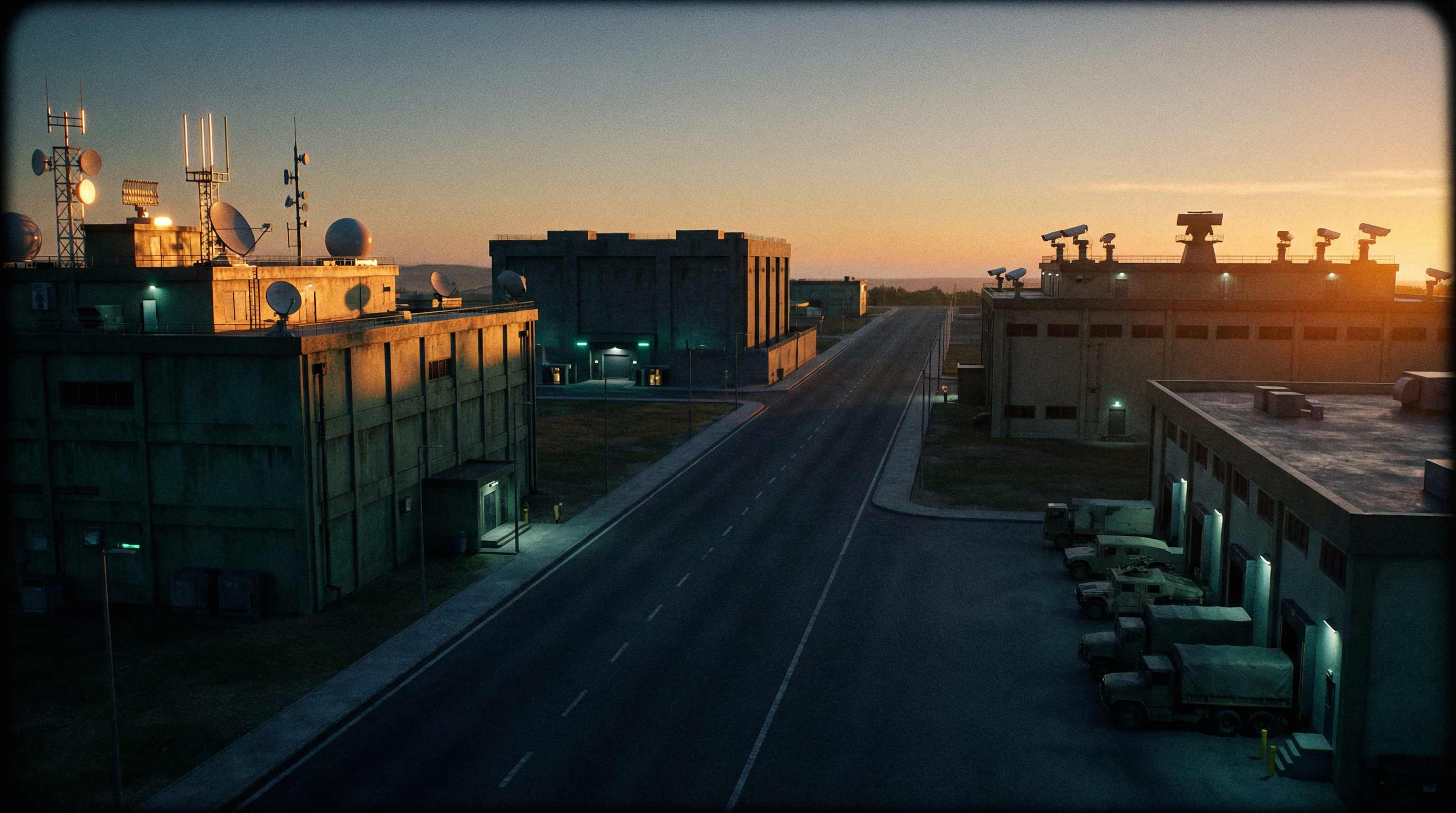
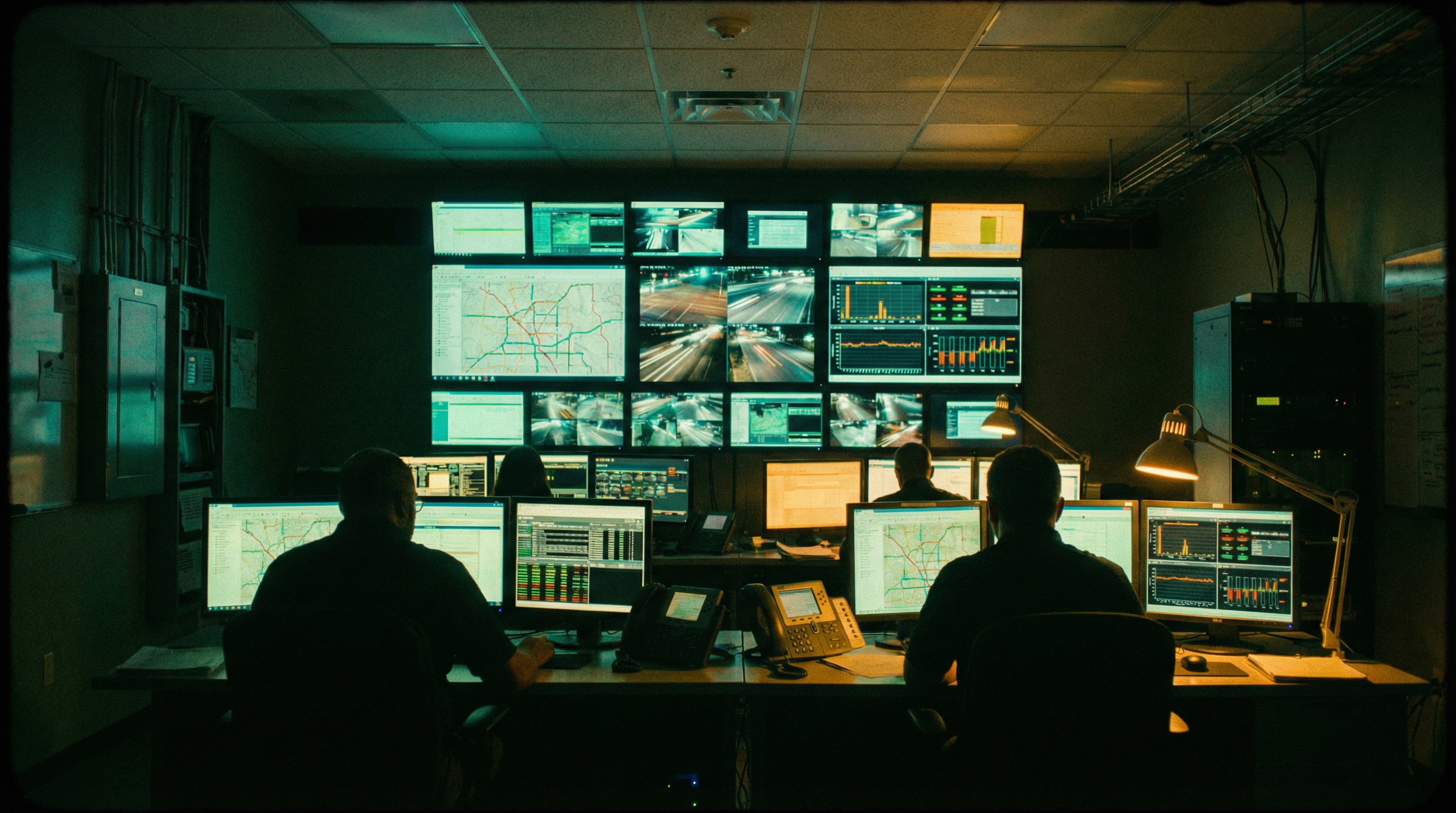
The Installation Security Blind Spot: When Physical and Cyber Threat Data Live in Different Systems
Physical security and cyber security report to different commands, run different tools, and generate different alert streams. The compound threat (the one that spans both) lives in the gap between them.
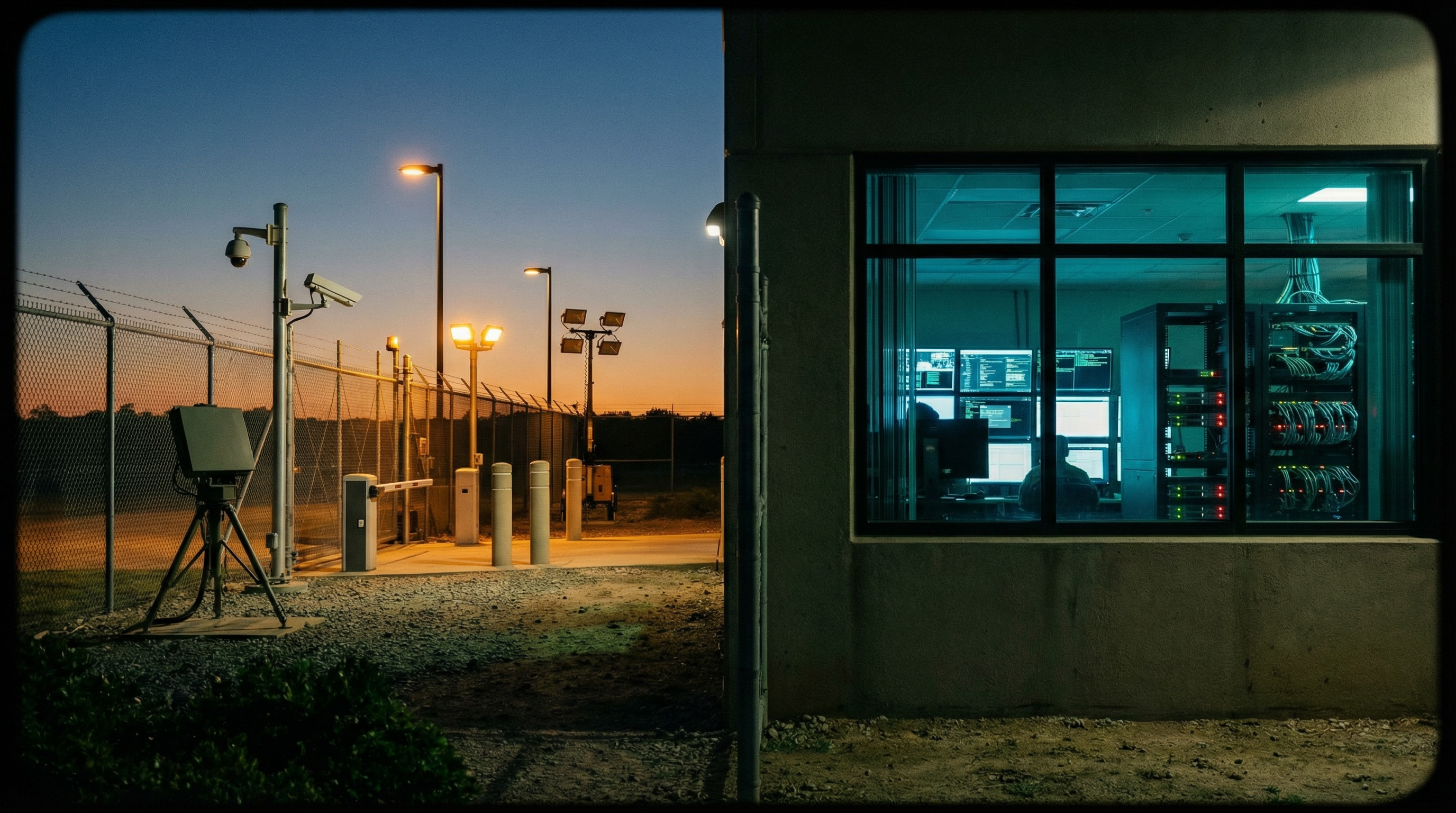
Your installation runs two security programs. They share a fence line and a perimeter but almost nothing else.
Physical security manages the sensors that watch the boundary: fixed cameras, radar arrays, lidar systems, access control readers. Cyber security manages the sensors that watch the network: SIEM logs, endpoint detection systems, network traffic analysis. Different teams. Different command structures. Different alert streams. Different tools feeding different dashboards in different operations centers.
This separation is not a failure of individual organizations. It’s structural. It reflects how defense infrastructure evolved: physical security emerged from facility management; cyber security emerged from IT. The skills, the tools, and the organizational reporting chains remain distinct. Until they need to talk about a threat that straddles both domains, they have little reason to cross those lines.
Two Security Programs, One Installation
A typical critical defense installation runs five to seven separate security systems in parallel. Physical security owns the perimeter layer: camera networks with video analytics, radar and lidar for motion detection, fiber-optic vibration sensors along the fence, passive infrared for heat signatures. Cyber security owns the network layer: endpoint protection across administrative and operational technology networks, intrusion detection systems, DNS filtering, network segmentation monitoring. Each produces signals. Each feeds an alert stream. Each is tuned to recognize its own domain’s signature threats.
The structural reality is this: physical security doesn’t see cyber events. Cyber security doesn’t see physical events. When either team gets an alert, they assess it within their domain. A vehicle near the fence line is evaluated against historical traffic patterns on that perimeter. A port scan is evaluated against baseline network behavior. Both systems are designed to recognize their own kind of noise and suppress false alarms. The problem emerges at the intersection.
The Convergent Threat
Adversaries don’t think in parallel systems. They think in compound campaigns.
Consider a realistic scenario: An advanced threat actor begins reconnaissance of your installation. On day one, they observe the perimeter from a distance using imagery. On day two, they position a vehicle on a public road adjacent to the fence line, aiming directional antennas toward the network boundary to map RF emissions and network topology. On day three, they launch a coordinated cyber probe: scanning for exposed services, testing for weak authentication, attempting lateral movement from a compromised contractor device.
What happens in your security operations center?
Physical security logs the vehicle. The analytics team reviews the footage. The vehicle is stationary, in public right-of-way, with no apparent attempt to breach the fence. Historical baseline shows similar traffic on that road. System flags it as low confidence. Alert suppressed.
Cyber security logs the port scan and the lateral movement attempt. The detection system runs it against baseline. A small percentage of daily traffic, no successful authentication, standard automated probe signature. System flags it as routine reconnaissance noise. Alert suppressed.
Neither alert reaches the watch commander’s desk. Neither system has enough context to recognize that these are related. But together, they describe a compound threat in progress. The adversary is mapping the perimeter, mapping the network, and coordinating the timing. The separate alerts hide the pattern.
This is not a communication failure. This is an architecture gap. The physical and cyber operations centers have no mechanism to correlate signals across domains in real time. They have no shared operational model. Each system is optimized for its own signal-to-noise ratio, and that optimization blinds each to threats that require seeing both streams at once.
Multi-Sensor Fusion as Intelligence
The solution is not a shared dashboard. Dashboards don’t create intelligence. They display information that’s already been processed. The solution is real-time fusion: bringing multi-domain sensor data into a single operational model where physical and cyber events can be correlated, contextualized, and prioritized together.
This means taking camera analytics outputs, radar tracks, lidar detections, fiber-optic vibration events, passive RF detection data, and cyber event logs and running them through a coherent correlation engine. The engine doesn’t care whether the signal comes from a camera or a network sensor. It cares whether multiple sensors of different types are detecting activity that points to the same operational intent.
In the scenario above, the fusion engine correlates the vehicle presence, the directional antenna positioning, and the network scanning into a single compound event. It attaches a confidence score that reflects both the individual signal quality and the cross-domain consistency. It timestamps the event with sub-30-second precision. It automatically routes the result to the perimeter defense team with full context: what sensors detected it, when, from where, and why the system assessed it as related.
The responder no longer gets two separate false alarms. They get one contextualized detection with clear chain-of-command escalation. The decision to investigate or engage changes. The response time shrinks. The probability of catching a real threat before it transitions from reconnaissance to action increases.
Every detection is logged with full audit trail. Every decision point is recorded. The system builds the case file automatically. This is what defense oversight requires.
What This Changes
Three things become possible when physical and cyber threat data live in the same operational model:
False alarm suppression improves because ambiguity resolves through cross-domain context. A camera detection becomes significant when it correlates with cyber activity. A network probe becomes significant when it correlates with physical reconnaissance. The systems learn each other’s noise signature and stop wasting the team’s attention on noise that makes sense within a single domain.
Response speed improves because the relevant information reaches the responder before they ask for it. The perimeter defense officer doesn’t wait for cyber security to confirm that something is happening on the network. The information arrives as part of the detection. The network operations team doesn’t wait for physical security to confirm that something is happening at the fence. They get it integrated into their own alert stream.
Accountability improves because the audit trail is complete and defensible. Every compound event is timestamped, attributed to the correct sensor stream, and recorded with the reasoning that drove the correlation. Command can see not just what was detected, but why it was assessed as a single coherent threat. This is essential for defense oversight and for the decision-making record.
The installation still runs multiple sensors optimized for different domains. Physical security and cyber security still operate as distinct disciplines. But the gap between them closes. The compound threats that live in that gap become visible. And the responders who defend the perimeter get the intelligence they need to act, not just alerts to manage.