The Forecast Belongs to Someone Else
A seasonal climate event is forecast by institutions whose job is the forecast. It is felt by operators whose job is the reservoir, the grid, the fishery, the coast. Between the two sits a bulletin. When the forecast and the operation don't share a common model, the forecast arrives as news, and the decisions it should have shaped get made on last season's picture.
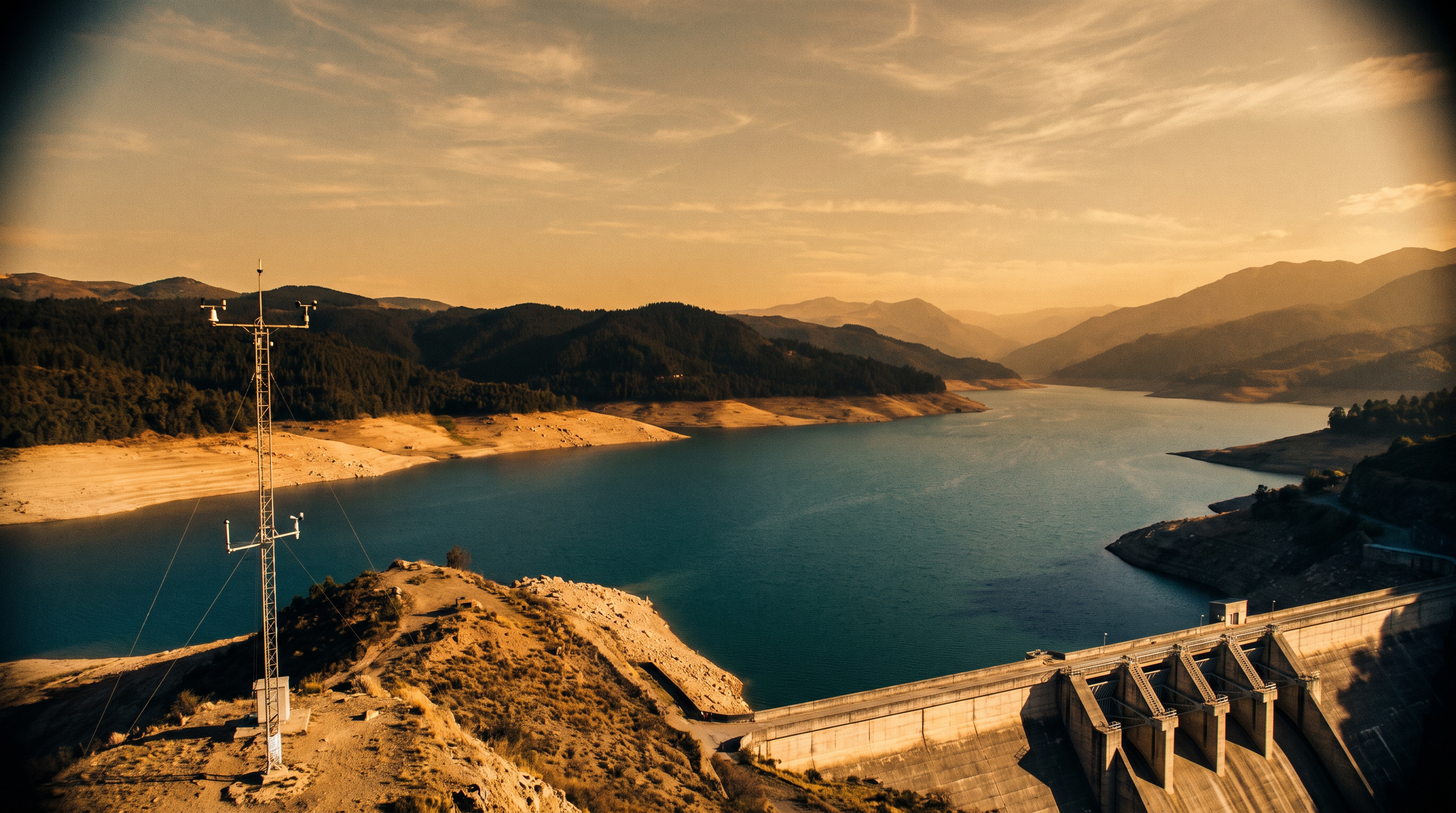
At the end of August 2026, Ecuador declared a national red alert for El Niño across all twenty-four of its provinces. The public forecast behind the alert put the probability of a historic-magnitude event in the last quarter of the year at close to seventy percent. What makes the event hard to manage is its geography. El Niño floods the coast. At the same time it dries the Andean and Amazon basins in the interior, and more than eighty percent of the country’s installed hydroelectric capacity sits in those basins.
So one phenomenon is, simultaneously, a flood emergency for the coastal provinces, a supply question for the power grid, a water question for the cities that drink from the highlands, a productivity question for the artisanal fishery, and a stress event for every protected ecosystem in between. Nobody designed it this way. This is simply what a climate signal looks like when it lands on a national portfolio rather than on a single operation.
The structural condition worth naming is not the event. It is where the forecast lives relative to the decisions it should inform.
The bulletin and the inbox
The forecast is produced by institutions built to forecast: the national meteorological service, the oceanographic institute, the international climate centers. They do this well, and they are right to keep doing it. Their product arrives at the operator as a bulletin: a probability, a category, a change in official status from watch to advisory to declaration.
The operator, meanwhile, runs a system that knows its own world in detail. Reservoir levels and inflows. Dispatch and reserve margins. Transmission loading by substation. Patrol schedules. Fishing licenses and closed seasons. Vegetation condition across a park.
The bulletin does not enter that system. It enters an inbox. Someone reads it, someone raises it in a meeting, and the translation from “seventy percent probability of a strong event” into “hold more water in this reservoir this week” or “expect the fleet to shift to this zone next month” happens by hand, if it happens at all. The forecasters did their job. The operation has nowhere to put it.
Why the bulletin doesn’t land
Three reasons, all structural.
The units are different. A forecast speaks in anomalies and indices: sea-surface temperature above baseline, an oceanic index crossing a threshold, rainfall as a percentage of normal. An operation speaks in megawatts, cubic meters per second, vessels per zone, hectares under stress. Without a shared model, there is no place where one vocabulary is converted into the other, so the conversion is done in someone’s head.
The clocks are different. A seasonal outlook has a three-month horizon. An operation runs on a daily rhythm. A seasonal probability has no natural slot in a daily operating picture, so it is read once, remembered vaguely, and rediscovered when the reservoir curve is already below where it should be.
The ownership is different. The forecaster is right to refuse operational responsibility; their institution exists to say what the climate will probably do, not what a utility should do about it. The operator is right not to become a forecaster. Each institution is behaving correctly within its mandate, and the decision falls into the space between them.
One event, five pictures
The portfolio problem makes this sharper. Coastal flood exposure is read by the civil-protection agency. Basin inflows are read by the hydro operators. Dispatch is read by the grid operator. Sea-surface temperature is read by the fisheries and conservation authorities. Highland rainfall is read by the water utilities. Each reading is accurate. Each institution is looking at the same El Niño.
But because each holds its own slice, the state ends up with five partial pictures of one event, and the trade-offs between them are made without a common reference. Water released for generation is water not held for supply. A fishery closed to protect a stressed stock is a livelihood decision for a coastal town already facing floods. These are legitimate trade-offs that a government is entitled to make. The difficulty is making them when nobody can see the whole event at once.
What a climate layer looks like when it is operational
The answer is not for operators to forecast. The forecast stays with the forecasters; that division of labor is correct and no operator should try to replace it.
The shift is to treat the forecast, and the observed climate variables underneath it, as governed layers inside the operator’s own real-time operational model, standardized in geography and time alongside everything else the operator already runs. Sea-surface temperature and its anomaly, rainfall, air and water temperature, and the official climate indices are all open data. They cost nothing to obtain. What they lack, in most operations, is somewhere to land.
Once they have that place, a few things become possible that a bulletin never allowed.
A reference climatology per zone: what normal looks like for this reservoir basin, this fishing ground, this stretch of coast, in this month. Anomaly detection against that reference, with thresholds the operator sets rather than inherits, such as a sea-surface anomaly above a defined value for a defined number of consecutive weeks. Official status changes treated as triggers in the operational system rather than as news in an inbox.
And coincidence rules, which is where the operational intelligence actually lives. A climate anomaly and vegetation stress in the same zone. A sea-surface anomaly and a shift in where the fishing fleet is spending its effort. A forecast rainfall deficit, a reservoir below its curve, and a substation already near its limit, all in the same basin. None of these coincidences is visible from inside any one institution’s picture. All of them are computable the moment the layers share a model.
The output is a daily dry-season brief that reads like operations, not meteorology: which basins are approaching their limits, which substations will bind first if inflows follow the forecast, which fishing zones are likely to see effort shift and when. Satellite observation of reservoir extent and coastal flood extent confirms what the models are saying, so the brief carries evidence rather than assertion. Orbit serves as verification, not prophecy.
What stays with people
Governed autonomous action has a narrow and legitimate role in this. Computing anomalies continuously, assembling the brief, routing a threshold crossing to the desk that owns it with the evidence attached: this is work a system should do around the clock without asking. The decisions the brief supports remain human. How much water to release. Whether to ration and where. Whether to close a fishery. Where to send the patrol. A climate layer that made those calls would be replacing the judgment the institution exists to exercise. The point is that the judgment is exercised on this season’s picture rather than last season’s.
For most operators the practical shape of this is an intelligence utility: the climate layer runs continuously on infrastructure the institution controls, the operators consume the brief, and the model, the thresholds, and the accumulated record stay with the institution. What is owned is the ability to ask, every morning, what the forecast means for this basin, this zone, this line.
A question for the next bulletin
The next time an official climate outlook or status change arrives, ask a simple question. What changed in the operational system when it did?
If the answer is nothing, and the bulletin was read, discussed, and filed while the system carried on with the same thresholds, the same release schedules, and the same patrol plans, then the forecast was received as news. The forecasters did their part. The operation now has to do its own: give the forecast somewhere to go.