The Line Item Nobody Quoted
A monitoring program's largest number is usually the hardware, and the hardware is usually well quoted. The costs that surprise operators sit between the quotes. When the vendor's scope and the operator's operating model don't share a common account, the gaps surface after the budget is approved.
A monitoring program for a pipeline, a grid segment, or a plant arrives with a budget built from quotations. The detection vendor quotes its software and its field units. The communications provider quotes its terminals. The instrumentation supplier quotes its transmitters. Each quote is accurate and carefully scoped. The total on the cover page is the sum of them.
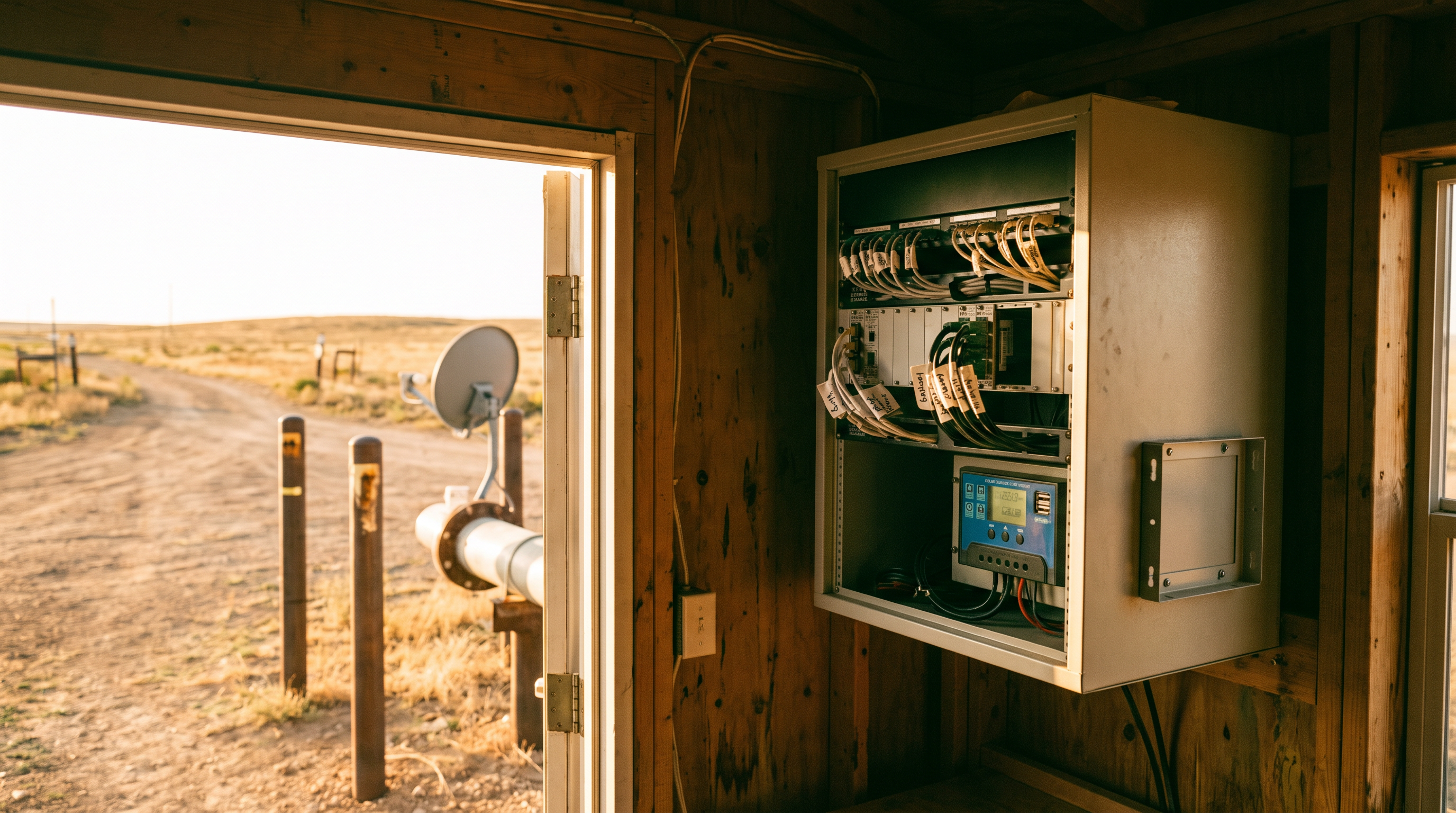
Then the program starts, and a second set of costs appears. Servers to host the data. Workstations in the control room. Travel for the vendor’s engineers, who are quoted for days on site but not for getting there. Power for a cabinet at a remote location. A person to do the integration work that each vendor assumes someone else is doing. None of these are exotic. They are simply not in anyone’s quote.
Quotes describe products, and programs are made of interfaces
A vendor quote answers a precise question: what will you supply, and for how much. It is not designed to answer a different one, which is what the operator needs in order to have a working system. Between the two sits a layer of work that belongs to no single supplier.
The reasons are structural. Each vendor defines its scope at the edge of its own product, because that is where its responsibility ends. A detection supplier delivers acquisition units and software. It does not deliver the server rack they report to, or the network path from a remote valve station, or the data connection into the operator’s historian. Those are the integrator’s problem, and in many programs there is no integrator in the budget at the point the budget is set.
This is why the largest line items tend to be the best understood and the least risky. Hardware is a product with a price list. The risk lives in the connective tissue, where nothing has a price list at all.
Why the hardware is the bigger number and the smaller lever
In a typical field monitoring program, equipment makes up the largest share of the build. It is also the part with the least room to move. Transmitters, acquisition units, enclosures, and actuators cost what they cost, and the quantities are set by the physical network.
The decisions that change the outcome sit in the smaller numbers. Where the sensors go, how the data from different suppliers is brought into one picture, which events trigger which responses, and who is trained to act on them. A program can spend heavily on hardware and still deliver very little operational capability if those decisions are left until the end.
Operators sometimes experience this as a surprise on the integration side, when it is closer to a difference in leverage. The equipment decides what the system can sense. The integration decides what the organization can do with it.
Closing the gaps before they become change orders
The practical remedy is a discipline applied at the start of the budget. Every vendor quote is read against a single question: what must also exist for this product to work as part of the whole. The answers are listed, priced, and assigned to a named party before the total is approved.
A few categories turn up repeatedly. Hosting and compute for the data the sensors generate. Operator workstations and the work to configure them. Travel and site access for specialist engineers. Spares and the logistics to hold them. Cybersecurity review of every point where field equipment meets the operating network. Commissioning and acceptance testing that crosses suppliers. Training that is built around the operator’s actual procedures, not each vendor’s manual.
It also helps to separate the one-time build from the recurring service early. A program that treats everything as capital finds itself unable to explain why a system that was fully paid for needs a budget every year. Maintenance, connectivity, licences, and the people who run the system are operating costs, and they belong in a separate line from the start.
Where a quotation does not yet exist, the honest approach is to show the item as a referential estimate with its assumption stated. A visible estimate invites correction. A silent omission becomes a change order.
One account of the whole
The deeper pattern is that each party holds an accurate picture of its own part and nobody holds the picture of the whole. The operator sees a total. The vendors see their scope. The integrator, when there is one, sees the gaps, but often too late to place them in the original budget.
A shared account of the program changes this. When scope, interfaces, responsibilities, and costs sit in one real-time operational model, a missing item is visible as a gap in the model before it is a cost on the ledger. Each supplier can see where its scope meets the next, and the operator can see which lines belong to no one.
This is what an intelligence utility does for the program itself, as well as for the network it monitors. It holds the connections between parts as first-class information. Operators who build the account early tend to report fewer surprises and better conversations with their suppliers, because the questions are asked while there is still room to answer them.
The hardware will always be the larger number. The line items that decide whether it works are the ones between the quotes, and they are cheaper to find on paper than in the field.