The Single Failed Fuse
A small, cheap component fails somewhere in a control system, and the consequence is out of all proportion to the part. The gap isn't the failure. It's that nobody held a live model of what depended on the thing that broke.
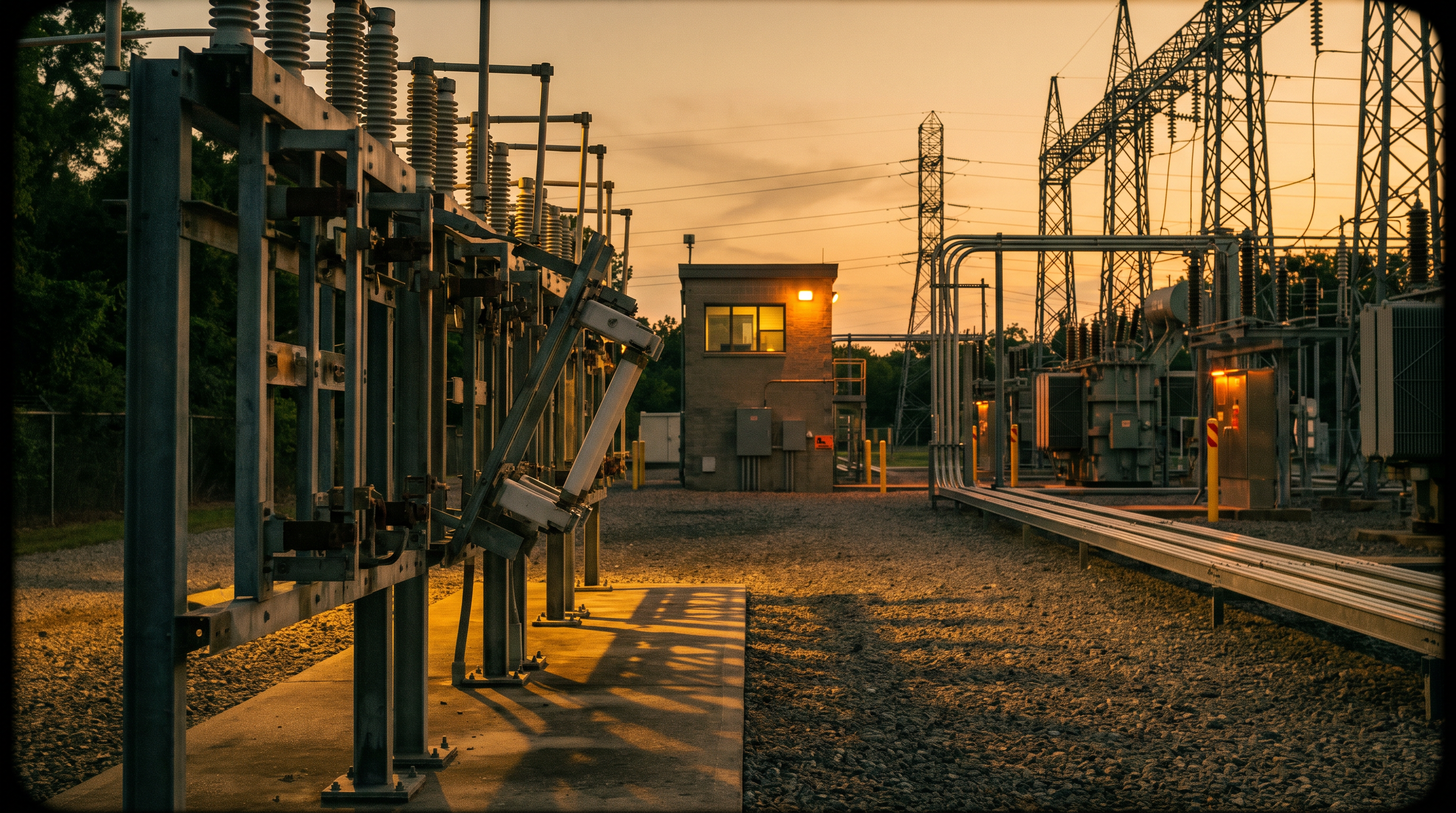
A fuse fails inside an automation cabinet. It is a small part, cheap to replace, and an electrician can swap it out in twenty minutes. None of that describes what actually happens next.
The fuse sat inside a control loop that governed a cluster of production assets. When it went, the automation system lost its command signal, and everything downstream of it shut down at once, for reasons that had nothing to do with the assets themselves, the process they were running, or anything a maintenance schedule would have caught. It stopped because nobody had a live model connecting that specific fuse to the specific things it made possible.
The same shape shows up anywhere a control system sits between an instrument and the assets it governs. A substation relay trips and takes out supply across a region for hours. A shared feeder drops and blacks out customers who never knew they shared upstream infrastructure. A single controller locks up and idles a production line nowhere near it. The failed part is nearly always small and fast to replace. The consequence rarely matches it.
What asset monitoring actually watches
Most operational monitoring is built around the asset it is attached to. A tag tells you the fuse is open. A dashboard tells you the substation tripped. An alarm tells you the controller stopped responding. All of that is true, and none of it answers the question that matters in the first ten minutes of an incident: what else, right now, is not working because this stopped working.
The gap runs in one direction. Operators generally know what feeds a given asset, because that’s what the asset needs to run. Downstream is where the model runs out. Nobody maintains, as a matter of routine, a live account of what a given breaker, fuse, or controller makes possible: which assets it commands, which processes downstream assume its signal is present. That account exists, if it exists at all, in the memory of a senior technician, or in a wiring diagram that was accurate the year it was drawn and has not been touched since.
So the response to a cascading failure starts with discovery instead of action. Someone has to work out, live, what actually went dark. Someone has to work out, live, what order things need to come back in, because restoring them out of sequence can trip something else. The minutes spent on that discovery are minutes the fuse itself never cost. They are minutes the missing model cost.
The consequence outruns the cause
This is why the ratio matters more than the incident. A component failure that would be a footnote on its own becomes the story of the day because the organization did not know, before it happened, what depended on it. The fix reached for afterward is usually more redundancy: a backup part staged nearby, a second path built in. Redundancy helps, but it treats the symptom. It does not answer the question that made the first failure expensive, which is that nobody could see the dependency chain before it broke.
The same shape appears at every scale, in every sector with enough infrastructure to have dependency chains longer than anyone tracks in their head. A transformer failure that should have been a local, contained event instead removes power across a wide area for hours, because the outage propagated along paths nobody had mapped as a single system. A control fault in one part of a facility idles an unrelated line three buildings over, because the two are wired together in a way that lives only in as-built drawings nobody consults during normal operations. The infrastructure was never actually independent. The monitoring just treated it that way, one asset at a time.
Building the downstream model
The fix is not a wiring diagram filed away for reference. It is a real-time operational model that runs the dependency chain continuously, in both directions: this relay feeds this transformer, this transformer feeds this substation, these feeders serve these customers. When the model is live and current, the question “what stops if this fails” has an answer before the failure, not twenty minutes after it.
That changes what happens in the first minutes of an incident. Instead of a technician reconstructing the topology out loud on a phone call, the system already knows which downstream assets lost their signal, and proposes a restoration sequence ranked by what has to come back first for anything else to come back safely. The human still authorizes the sequence. The system removes the part of the response that used to be pure discovery.
It also changes what gets prioritized for redundancy before anything fails. Not every fuse deserves a backup. The ones that sit upstream of the most consequence do, and consequence cannot be ranked without a model of what is actually downstream of what. An organization that has never mapped its dependency chains is, by default, treating every component as equally replaceable and equally forgettable, which is true right up until one of them isn’t.
The next fuse
Somewhere in any sufficiently complex operation, a small component is going to fail this month or next. That part is close to a certainty. What is not certain is how long it takes to find everything the failure took down, and whether anyone had already mapped it before the failure happened. An organization that can answer that question in minutes instead of hours has not made the fuse any less likely to fail. It has eliminated the part of the outage that the fuse itself never actually caused.